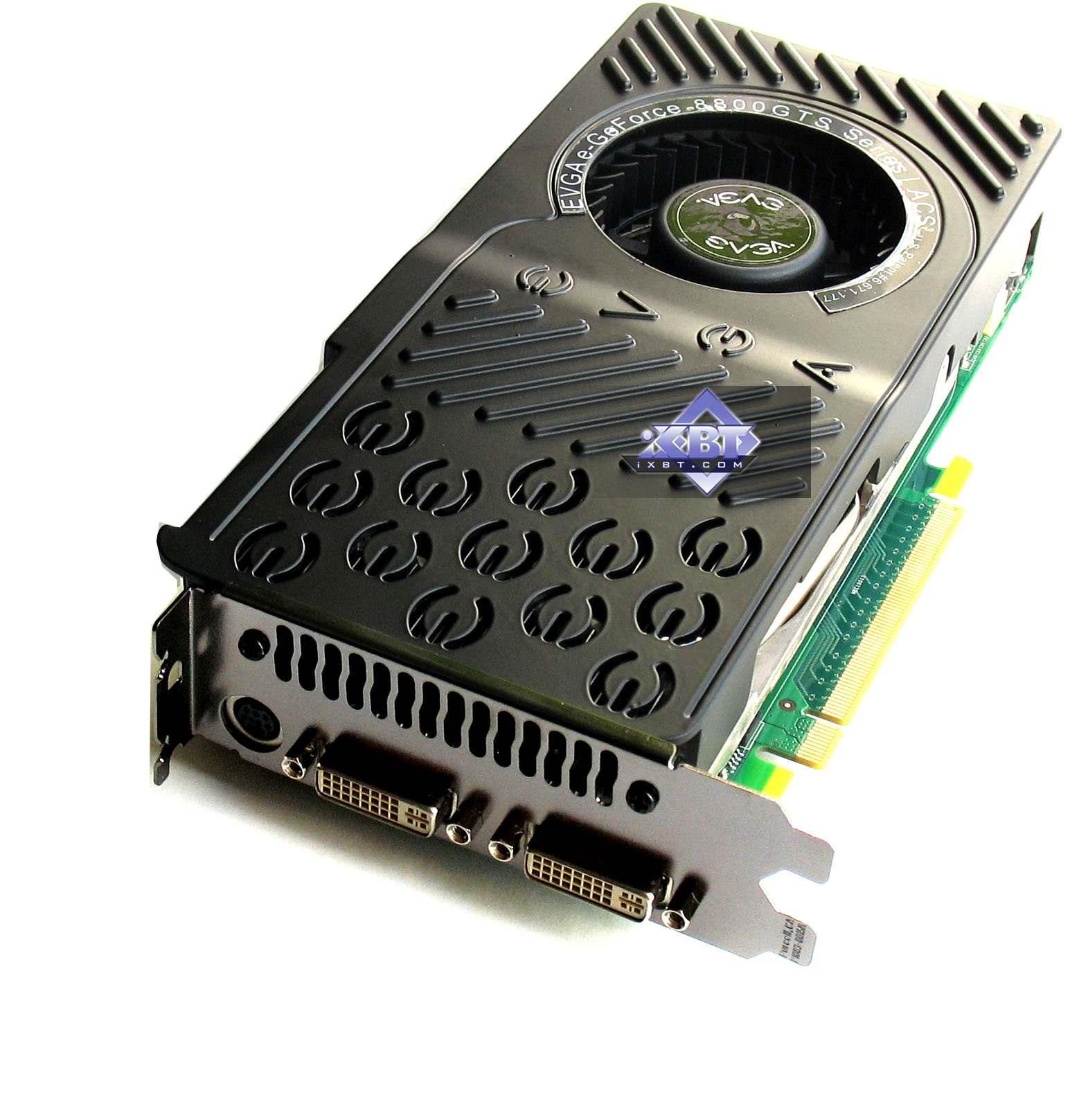
Your search for the perfect graphics card is over — SLI™-Ready NVIDIA® GeForce® 8800 GT has arrived. The ideal combination of power, performance, and price, GeForce 8800 GT offers GeForce 8 Series goodness, 112 processor cores, and a 256-bit frame buffer for jealousy-inducing DirectX 10 gameplay at ultra fast. Jan 18, 2010 Geforce 8800GT Alpha Dog Edition Updating drivers. I no longer have the cd for my drivers for this card as I lost it and I have tried. For GeForce driver.
Contents • • • • • • • • • • • • • • • • • • • • • • • GeForce 8 Series overview [ ] All GeForce 8 Series products are based on. The King Of Fighters Full Apk Free Download more. Max resolution [ ] Dual Dual-link DVI Support: Able to drive two flat-panel displays up to 2560×1600 resolution.
Available on select GeForce 8800 and 8600 GPUs. Shirley Murdock Home Zip here. One Dual-link DVI Support: Able to drive one flat-panel display up to 2560×1600 resolution.
Available on select GeForce 8500 GPUs and GeForce 8400 GS cards based on the G98. One Single-link DVI Support: Able to drive one flat-panel display up to 1920×1200 resolution. Available on select GeForce 8400 GPUs. GeForce 8400 GS cards based on the G86 only support single-link DVI.
Display capabilities [ ] The GeForce 8 series supports 10-bit per channel display output, up from 8-bit on previous NVIDIA cards. This potentially allows higher fidelity color representation and separation on capable displays. The GeForce 8 series, like its recent predecessors, also supports (SLI) for multiple installed cards to act as one via an SLI Bridge, so long as they are of similar architecture. NVIDIA's video rendering technology is an improved version of the original PureVideo introduced with. It now includes GPU-based hardware acceleration for decoding HD movie formats, post-processing of HD video for enhanced images, and optional (HDCP) support at the card level.
GeForce 8300 and 8400 Series [ ]. NVidia GeForce 8400 GS 'Rev 3.0' In the summer of 2007 NVIDIA released the entry-level GeForce 8300GS and 8400GS graphics cards, based on the G86 core.
The GeForce 8300 was only available in the OEM market, and as the GeForce 8300 mGPU motherboard GPU. These graphics cards were not intended for intense 3D applications such as fast, high-resolution video games.
They were originally designed to replace the 7200 and 7300 models, but could not due to their poor game performance. It was able to play modern games at playable framerates at low settings and low resolutions making it popular among casual gamers and (Media Center) builders without a or motherboard. At the end of 2007 NVIDIA released a new GeForce 8400 GS based on the (D8M) chip. It is quite different from the G86 used for the 'first' 8400 GS, as the G98 features VC-1 and MPEG2 video decoding completely in hardware, lower power consumption, lowered 3D-performance and a smaller fabrication process.
The G98 also features dual-link DVI support and PCI Express 2.0. G86 and G98 cards were both sold as '8400 GS', the difference showing only in the technical specifications. Sometimes this card is called 'GeForce 8400 GS Rev. During mid-2009 NVidia released another revision of the GeForce 8400 GS based on the chip. It has a larger amount of RAM, is capable of DirectX 10.1, OpenGL 3.3 and Shader 4.1. This card is also known as 'GeForce 8400 GS Rev. GeForce 8500 and 8600 Series [ ] On 17 April 2007, NVIDIA released the GeForce 8500 GT for the entry-level market, and the GeForce 8600 GT and 8600 GTS for the mid-range market.
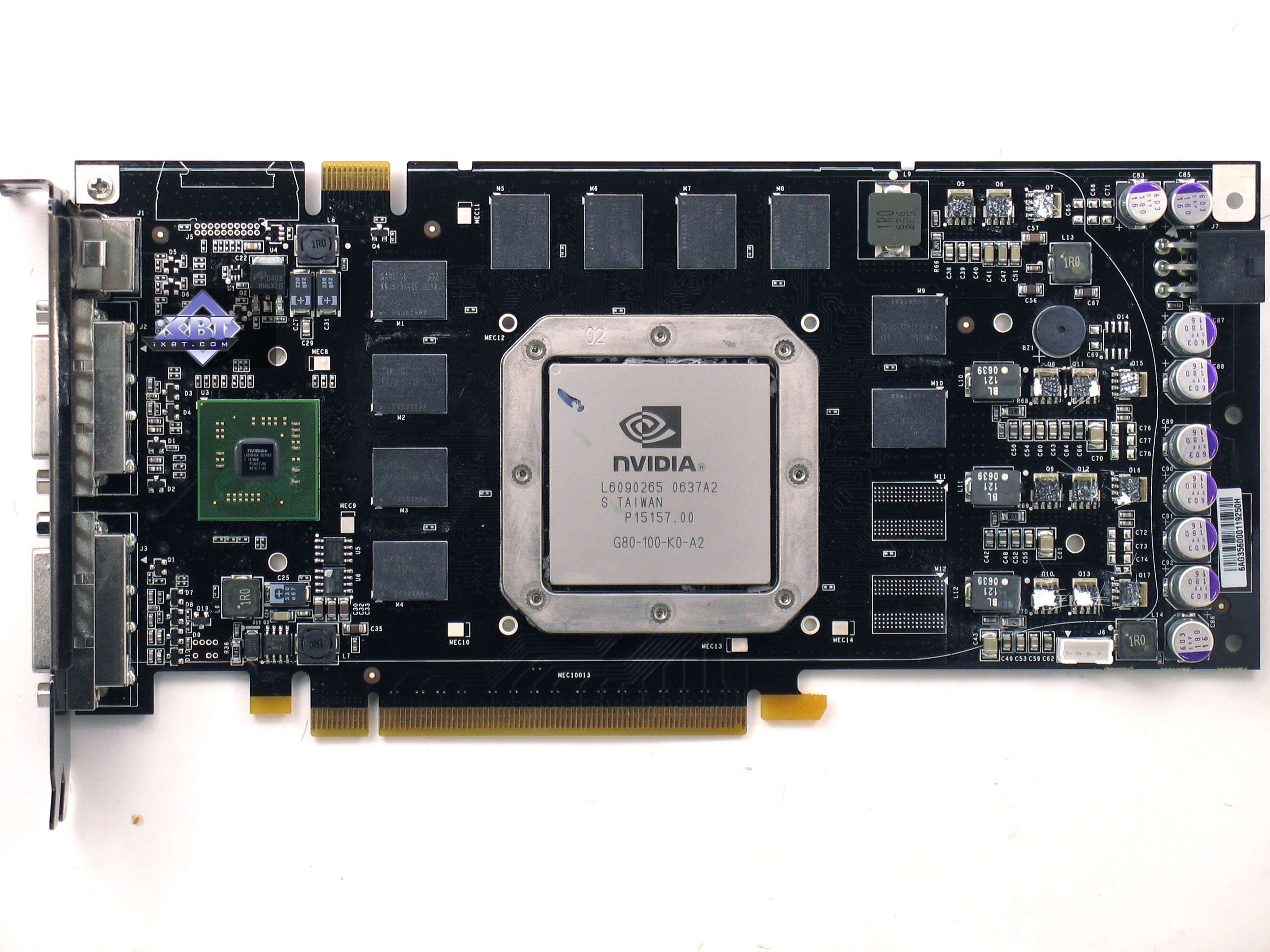
As with many GPUs, the larger number these parts carry does not guarantee superior performance over previous generation parts with a lower number. NVIDIA introduced 2nd-generation PureVideo with this series. As the first major update to PureVideo since the GeForce 6's launch, 2nd-gen PureVideo offered much improved hardware-decoding for and video super. GeForce 8800 Series [ ]. Underside The 8800 series, codenamed G80, was launched on 8 November 2006 with the release of the GeForce 8800 GTX and GTS for the high-end market. A 320 MB GTS was released on 12 February and the Ultra was released on 2 May 2007.
The cards are larger than their predecessors, with the 8800 GTX measuring 10.6 in (~26.9 cm) in length and the 8800 GTS measuring 9 in (~23 cm). Both cards have two connectors and a / connector. The 8800 GTX requires 2 PCIe power inputs to keep within the PCIe standard, while the GTS requires just one. 8800 GS [ ] The 8800 GS is a trimmed-down 8800 GT with 96 stream processors and either 384 or 768 MB of RAM on a 192-bit bus. In May 2008, it was rebranded as the in an attempt to spur sales. On 28 April 2008, announced an updated line featuring an 8800 GS.