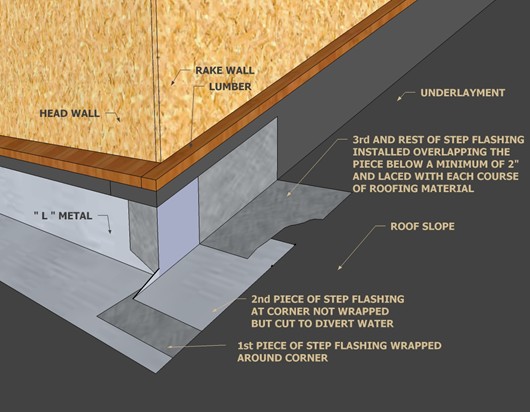
A similar cap can be made with flashing tape and aluminum coil stock. The sides run long. Run flashing tape 4 in. Past the top and bottom flanges. Make sure the tops of the side pieces stay at least 1 in. Short of the top of the head piece so that the head piece will have a good, continuous bond with the sheathing. Step and Kick-Out Flashing at Roof-Wall Intersections. Pyaar Ki Yeh Ek Kahani Full Song Mp3 Download. Install shingles over the portion of step flashing on the roof. When installing metal or rubber.
Given the fact that windows create large holes in a house’s exterior, I’m always shocked to see how many builders in our area don’t. In the nine years that I’ve been building and renovating homes, I’ve seen windows that haven’t been integrated with the housewrap, improperly flashed installations, and even windows with no flashing at all. Not only does improper installation affect the durability and warranty of the windows, but it also exposes the wall cavity to moisture problems. Like any builders, my crew and I want to use efficient practices that won’t negatively affect the quality of our work.
For us, that means using a pragmatic approach to installing windows with worst-case scenarios and long-term durability in mind. Water gets behind siding Based on conversations with subcontractors and local building officials, we’ve concluded that the reasons windows aren’t installed correctly often stem from an unrealistic expectation about the effectiveness of siding in keeping moisture out of the wall cavity. What many window installers don’t realize is that no matter how well siding is installed, moisture finds its way between it and the housewrap. When moisture ends up on a layer as slick as housewrap, it does a logical thing: It slides down the wall. Once that moisture reaches the window, it easily finds its way into the through even the tiniest holes.
Moisture that leaks into a wall cavity causes mold to grow. Mold is bad, for materials and for humans. That’s why we do everything we can to keep water moving out and away from the window by integrating it with the housewrap. Read the window manufacturer’s guidelines Most window manufacturers recognize the disastrous effect improper installation of their products can have on a home, including significant energy loss. That’s why they provide detailed installation instructions for their products.
Following these instructions helps to keep the wall cavity dry and fulfills the window manufacturer’s warranty. Although the photos show my crew installing metal-clad windows with integral flanges, the steps outlined here offer a look at fundamental elements found in most manufacturers’ installation guidelines. They address forming the, shimming the window so that it works properly, and flashing the to shed water. These steps will receive LEED points as well.
We figure that our sillpan and flashing approach adds about 10 minutes to the installation time for each window and an average of $15 in materials for each double-hung unit. That’s relatively cheap insurance for such a large investment. When guidelines conflict These days, every housewrap, flashing-tape, and window manufacturer has a specific set of installation guidelines that must be followed to uphold each respective product’s warranty. Install Plugins In Photoshop Portable Cs5. So what do you do when they contradict one another? We follow contributing editor Mike Guertin’s advice and use the most-restrictive protocol. For instance, when the window manufacturer shows no flashing details, we follow the tape or housewrap instructions.
When one set of instructions calls for a simple flat sill pan and another calls for a sloped pan, create a sloped pan. Free Download Jagadam Video Songs. It’s unlikely someone will claim you didn’t follow the instructions by doing more than is called for. When in doubt, though, follow the window manufacturer’s instructions.
The International Residential Code (R613.1) requires windows to be “installed and flashed according to manufacturers’ instructions.” If there’s ever a problem, you’ve done what was required by the building code. Prepare the rough opening with housewrap and pan flashing Most builders make an X-cut in the housewrap and staple the resulting tabs into the opening prior to installing the window.